


Five questions for Andrea Mennillo: “The world between global interests, economics and relations among states. From geopolitics to business diplomacy "
In a globalized society, it is essential to know what is happening in the world and understand the different scenarios we must confront. The management of relations between states is a very complex issue, made even more complex when players involved are culturally different and politically distant. In this dense network of global interests, in this dense network of global interests, I try to offer a look on this topic answering to the most common questions I receive from business students.
- What is geopolitics for you, and why is it so important for business?
Geopolitics allows us to understand the complexity of the relationships that exist among states in the modern era. Swedish scientist Rudolf Kjellén was the first to use the term in the early 20th century. The same term was later taken up all over the world during the two world wars. The etymology of the expression allows us to understand the deep meaning: GEO + POLITICS, where GEO means "Earth", recalling a global idea that today must necessarily be read in a contemporary way, that is "international". POLITICS comes from “Polis”, referring to "city affairs" according to Aristotle's idea, and defines the set of activities associated with the government of a country, or an area. Geopolitics can therefore be described as the discipline that deals with investigating the relationship between international political power and different geographical structures.
- How do you think international relations affect the economy?
There is certainly a direct link between the two areas. Let's look at some examples in the recent past. The sanctions imposed until 2015 cost Iran about 20% of its GDP, while removing them freed at least $100 billion available for new investments. Instead, the sanctions imposed on Russia by the European Union after the Ukraine crisis immediately cost Italy about 1 billion euros in terms of contracts already signed. Finally, see what happened between the USA and Venezuela, one of the world's leading oil producers, when in February 2019, following the sanctions imposed by the United States, the South American country's oil production dropped to 1.1 million barrels a day, compared to 1.34 million at the end of 2018 (and from 2.4 mbd in 2015). As you can see, international relations and economics are closely related.
- How does business diplomacy fit into all this?
Business diplomacy is primarily a relationship. But it is also knowing the world around us. How can we move in this complex and global geopolitical scenario without trying to understand the perspective of others and without different cultural aspects? From this perspective, business diplomacy is an indispensable tool for negotiating in the global arena, bringing together business perspectives with countries’ needs. In particular, by building long-term relationships with representatives of foreign governments and non-governmental (economic and non-economic) stakeholders with the aim of gaining legitimacy in a foreign business environment.
- In your opinion, what skills are needed to seize the opportunities offered by the current globalized world?
Building experience in the field of business diplomacy is certainly useful to fully understand the dynamics of relations among states and international strategies. It is an experience that I always recommend to students of business. However, to access this type of profession it is necessary to possess analytical abilities and a set of personal skills, especially in the fields of communications and relationships. It is important, in fact, to be able to understand the other's point of view with an intercultural perspective to build long-lasting relationships.
- What is the real value of geopolitics for business diplomacy?
Understanding geopolitical balances allows us to grasp in advance new emerging needs in the various countries and to be able to provide them with adequate answers, thus creating new business opportunities. However, what opens the door to multinational companies in countries around the world is the ability to build trust with rulers, decision makers, entrepreneurs and local institutions, also overcoming complex challenges and barriers to entry. An objective for which an excellent reputation and great diplomatic skills are fundamental.


“A Diplomat’s Perspective: Global Geopolitics After COVID-19” with Ambassador Giampiero Massolo
Here the recording of the conference organised by Gabelli School of Business on last June 24th. Dean Donna Rapaccioli and I had the pleasure to discuss with Ambassador Giampiero Massolo, President of Fincantieri S.p.A. and President of the Italian Institute for International Political Studies, about: “A Diplomat’s Perspective: Global Geopolitics After COVID-19”

“Sovereign Debt: A Looming Debt Crisis?” with Anne-Laure Kiechel
Here below the recording of the conference organised by Gabelli School of Business on last June 22nd. Dean Donna Rapaccioli and I had the pleasure to discuss with Anne-Laure Kiechel, Founding Partner of Global Sovereign Advisory, about “Sovereign Debt: A Looming Debt Crisis?”.
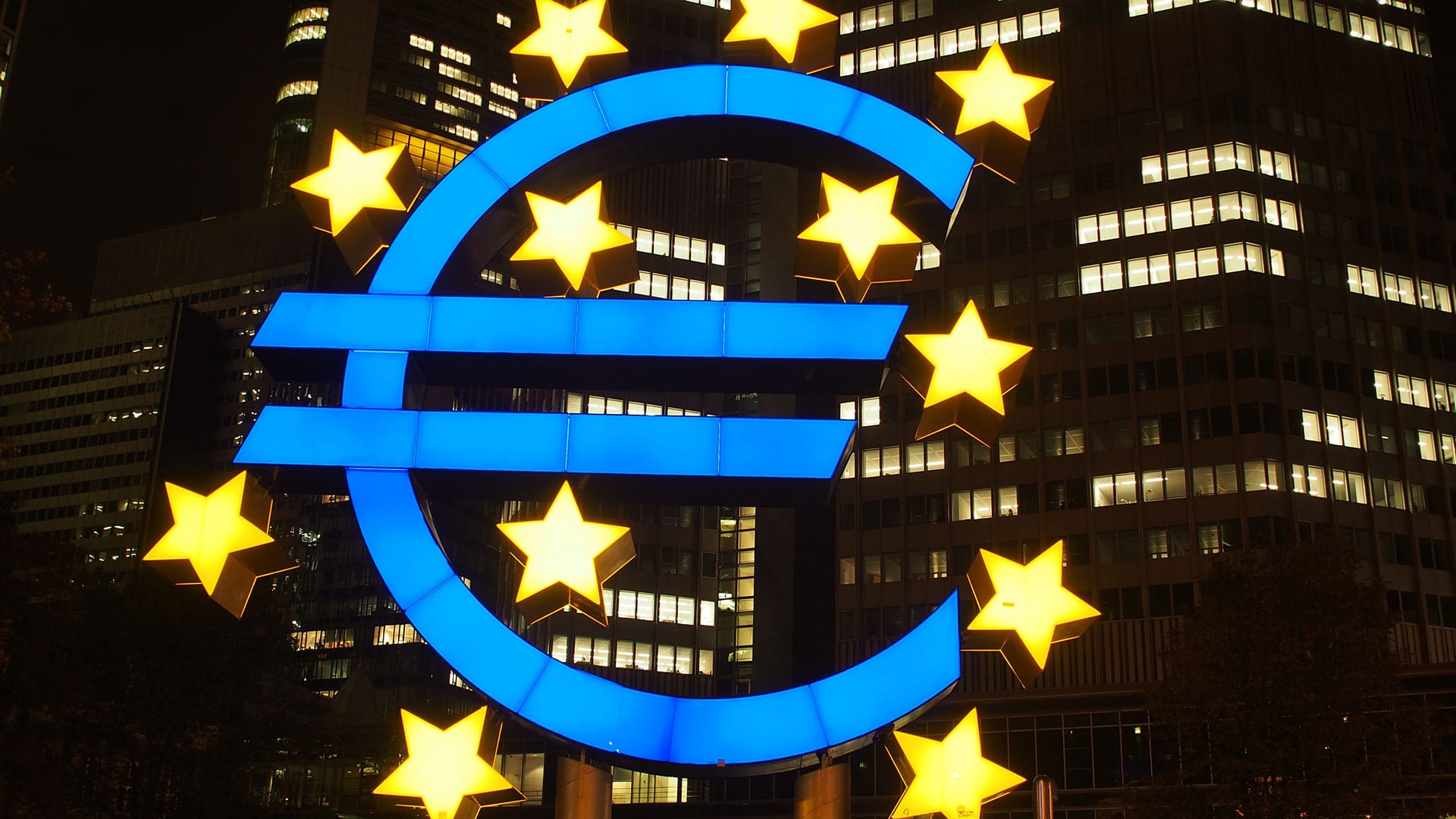
“A Case Study: European Financial Institutions During and After COVID” with Domenico Siniscalco
Here below the recording of the conference organised by Gabelli School of Business on last June 8th. Dean Donna Rapaccioli and I had the pleasure to discuss with Domenico Siniscalco, former Italian Minister of Finance and current Managing Director and Vice Chairman at Morgan Stanley, about “A Case Study: European Financial Institutions During and After COVID”.
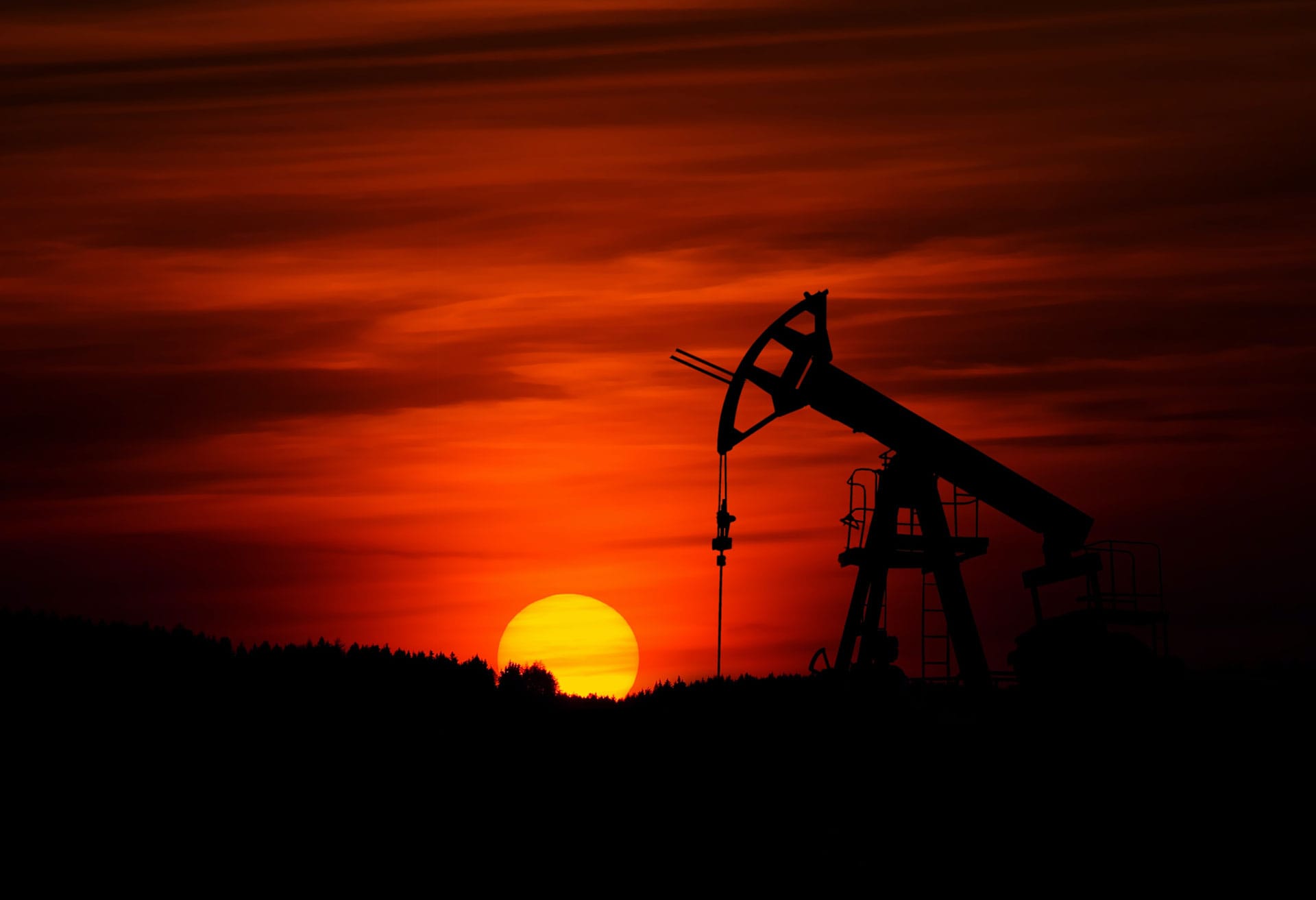
“Down and Under: The Pandemic’s Impact on the World’s Oil Industry” with Paolo Scaroni
Here below the recording of the conference organised by Gabelli School of Business on last June 4th. Dean Donna Rapaccioli and I had the pleasure to discuss with Paolo Scaroni, former CEO and General Manager of Eni Spa Oil and Gas and current Deputy Chairman of Rothschild & Co, about “Down and Under: The Pandemic’s Impact on the World’s Oil Industry”

“Entrepreneurship and the Future of the Online Luxury Retail Market” with Charles Gorra
Here below the recording of the conference organised by Gabelli School of Business on last June 2nd. Dean Donna Rapaccioli and I had the pleasure to discuss with Charles Gorra, CEO and Founder of Rebag, about “Entrepreneurship and the Future of the Online Luxury Retail Market”.
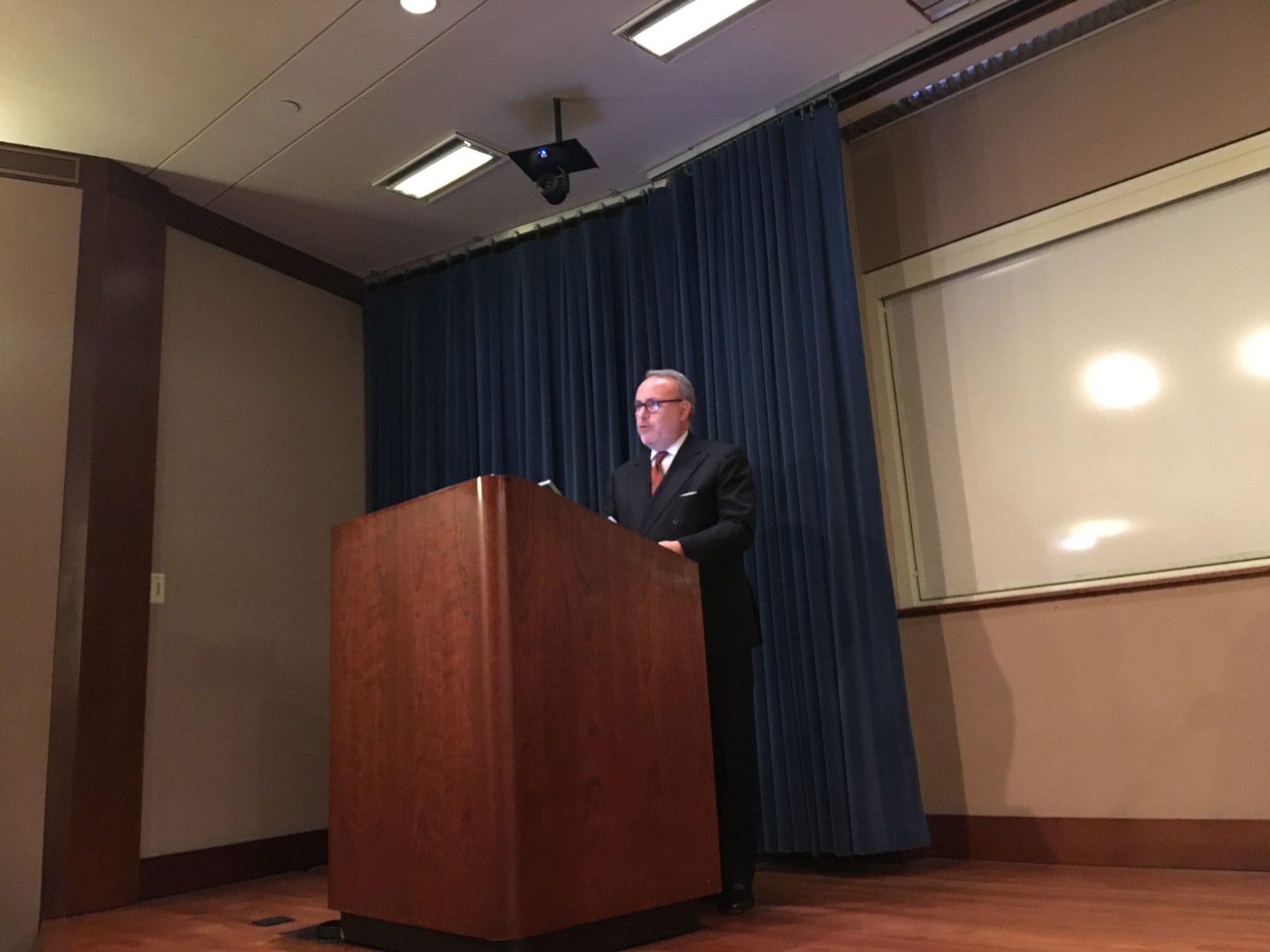
Andrea Mennillo’s speech on “Geopolitcs: its Impact on Global Business” Made at Fordham University’s Gabelli School of Business.
Fordham University – Gabelli School of Business
Lincoln Center, October 24, 2019
Opening Remarks
Good afternoon to everyone. As always, I want to thanks Dean Rapaccioli for her usual willingness to give space to meetings with strong and concrete international view.
I also want to thank Father McShane and Rev. Vincent Decola for their sensitivity for giving green light to these conferences with an international perspective. Today we focus on geopolitics.
We are here today because it is important to enrich our personal cultural background starting from knowledge and study.
The objective is to understand what happens around us gathering information from day by day reality around the world. It is crucial to know more about international politics and international relations and related impacts on business activities.
These are just insights that apparently seems very far away from us but – on the contrary – they are not, because have great consequences on the way we do business.
Business is global now. Talking about impacts, let’s think about for example to the relevance of trade agreements, to oil prices changes during conflicts, etc…
So, welcome to everyone, and thank you for being here with us.
Geopolitics and globalization in the digital era
Geopolitics and globalization are two concepts that it is important to clarify because they are strictly connected. First of all, what does geopolitics mean?
Geopolitics is a recent word created to define the complexity of relations among states in the modern era.
Rudolf Kjellén, a Swedish political scientist, was the first to use this word at the beginning of the 20th century and it came into worldwide use during the World Wars.
Geopolitics is the union of two Greek words – GEO + POLITICS – where:
- GEO means Hearth and this has to do with a global idea which oblige us to turn this ancient word into a more contemporary one that is “international”;
- POLITICS comes from Polis, that means “affairs of the cities”(according to Aristotle’s ideas), defining the set of activities associated with the governance of a country, or an area.
Finally, Geopolitics is the analysis of the relation of international political power to the geographical setting. Here we come to globalization.
Thecurrent context is strongly dominated by interculturality, complexity and dynamism.
Globalization is not a phenomenon that is born today but has always existed and over time took on different connotations depending on the historical period.
Todaythe rapid growth and spread of new information technologies applied to telecommunications reduces even more distances between countries, both referring to economic activities and to everyday life.
The “winners” in this current scenario are all the companies that:
- deal with the physical transfer of goods (see Amazon, for example);
- sell intangible services through the network (see big internet companies, for example).
However, we have to consider the reality, made up by different countries, boundaries, commercial treaties, fiscal rules, payment systems, tariffs, customs duties and taxes (direct and indirect).
Some of the main international economic agreements in force are:
- NAFTA(North American Free Trade Agreement) which is going to be replaced by the USMCA (which includes Mexico), introducing the progressive elimination of all tariff barriers among countries within the agreement;
- therecent Europe-Japan agreement;
- theWTO rules;
- CETA, the agreement between the EU and Canada;
- MERCOSUR, agreements among South American countries;
- bilateral(increasingly widespread) and multilateral agreements;
- freetrade agreements;
In this global arena we have to think about criminal actions so there are set of laws and procedures to preventthem.For example those rules related to anti-money laundering. US imposed the Foreign Account Tax Compliance Act (FATCA) to foreign countries that want to make business with US citizens in order to contrast tax evasion. These rules were necessary to manage great growth of international transactions.
Today it is important to be informed on what is happening around the world (in USA, there seems to be very little general interest in what happens outside), because event now has global consequences, even in real time.
There are important examples of globalization that come from the past (religious and territorial).
In our Jesuit tradition we have two important men to remember, both consistent with Ignatian spirituality and its missionary dynamism:
- Francis Xavier, was born in XVII century (1506), he brought the Christian message throughout Asia (in particular, in Japan and in India). Francis Xavier together with Ignatius of Loyola was co-founder of Society of Jesus. He is Patron of Catholic Missions;
- MatteoRicci, who in the 16th century dedicated his mission to the Christianization of China, fully penetrating the Chinese culture and learning language, tradition up to become a leading representative of the imperial court, esteemed for his great experience, and thanks to this he still be remembered in China even today.
As you see, the evangelical message was the first global message. Francis Xavier and Matteo Ricci are here great examples.
Coming back to the past means learning from who came before us, means contemplating and always having in mind valuable experiences.
The playground is the world and in our daily business life it is important to know who passed the baton to people like Father Mcshain and Rev. Vincent Decola.
The same Ignatian spirit today requires from each of us “… the willingness to participate in social and political life and to develop our human qualities and professional skills to become more competent operators and more credible witnesses”(from Principi Generali della Comunità di Vita Cristiana del 1998). Once again this message tell us that it is important to acquire the necessary knowledge around us, to become a bridge between diversity.
Here in Fordham we must be the first who are able to understand this kind of messages. Knowing history means that we should understand the globality of Jesus‘ message. A message wich is does not closed within borders.
The Christian faith is -in fact- an inclusive concept, it is an attitude of reciprocity and openness towards the others which goes beyond political and cultural boundaries.
An other example of globalization, this time a territorial one, is the Roman Empire expansion, which I often like to mention in my interventions: from a few huts near the Tiber river, it expands throughout the Mediterranean and Europe.
Rome was one of the first multi-ethnic and “global” state.
Its open society leads it to attract various Italic people and to integrate its cultures into a unique “melting pot”, from which was born a state capable of assimilating external elements, enhancing them and expanding itself to the borders of the world known at that time.
Geopolitics and Diplomacy
Why is geopolitics so important? Geopolitics, even if involves different disciplines – such as history, geography, anthropology, economics and others – is not a science, but rather the study of specific cases, where there is competition for a territory and for projects.
The keywords are always dialogue and confront. In all ages. Activities traditionally delegated to diplomacy and ambassadors.
But what is diplomacy and who was the ambassador?
- Diplomacy comes from the Greek verb „diploun“ (fold in two). During the Roman Empire the imperial documents, as „passports“ and transit permits, were fixed on double metal plates, folded and sewn. These documents were called “diplomas”. Later, this name was used for all the official documents. The use of the terms “diplomacy” and “diplomatic” dates back not earlier than 1796, when in England Edmund Burke began to use it by designing “the set of political-institutional procedures through which states maintain relations with each other”. Starting from 1815, after the Congress of Vienna, the diplomatic service became a real profession distinct from the politician, thus acquiring juridical value with norms and prescriptions;
- Geography is related to diplomacy: in the past borders were mainly set by nature (rivers, mountains, seas,…). Then borders were sometimes decided by politics without taking into considerations people living over a specific land. A fact that is often a reason for conflict;
- See for example: Kurds is an ethnic group composed of 50 million people divided (by politics) in five nations such as Turkey, Iran,Iraq, Syria and Armenia. The Kurdish diaspora is similar to other ethnic group such as the Armenians. Today Kurdistan is not a State but is a region with geopolitical relevance. In Syria and Iraq they have gained a special status; in Iran people live peacefully but in the other countries they are fighting;
- Current news makes us well understand what today’s geopolitics is. See revolutions currently open all around the world.
Ambassadors were spokesmen and reported to their sovereign. They represent their own country in other states, where they are in charge of conducting negotiations and maintaining relationships. The importance of this role, is demonstrated by the fact that it is the highest office among the civil servants (the appointment as ambassador is the highest honor a citizen has received from his country). In fact, in the republics they had a superior authority to that of the royal correspondents. In the second millennium, the countries with the largest diplomacies were: France, Spain, UK, Vatican City.
Today, technology has changed their role. The web has made relationships faster and more direct, even among Presidents and Prime Ministers. The role of diplomacy has therefore become more commercial oriented.
In the current global scenario it is therefore important to learn to relate and to reach points of convergence.
It is not by chance that ambassadors were political experts, trusted, cautious and with diplomatic ability.
In this context, arises the value of a profession that I know well as Business Diplomacy.
It consists in establishing and sustaining positive relationships with foreign government representatives and non-governmental stakeholders (economic and non-economic) with the aim to build and sustain legitimacy in a foreign business environment.
Business diplomacy is a way to seize opportunities in the current globalized world. It requires a set of important competences such as cross-cultural communication skills, interpersonal influence, empathy, networking abilities, adaptive thinking, resilience, knowledge of country’s culture and traditions.
In business diplomacy, what opens doors for multinational companies worldwide is an individual’s ability to build trust with rulers, decision-makers, entrepreneurs and leading figures in foreign institutions – even where such opportunities come intertwined with complex challenges and barriers to entry.
In business diplomacy, it is one’s reputation, diplomatic talents, and deep study of the country that make creating important opportunities.
Geopolitical poles
In this globalized world it is fundamental to be able to analyze international equilibrium from a wide perspective.
During decades (years 1950, 1980, 2000, today) the first 5 countries ranking for GDP, population and military expenditure has changed, reflecting changes in world balances.
I see 6 big areas of power/influence
- Three main leading countries: US, China and Russia. They are the strongest economies of the world with the most powerful armies.
- Russia has a leading political influence, but a lower economic power than US and China. It ranks 5th in the world by GDP;
- But they are very different countries in terms of government systems (only US is a democracy);
- Russia is a huge country, it starts from Europe and covers a very big part of Asia: Vladivostok[1], a Russian city placed beyond the Eastern part of China and in front Japan – is 8,30 hours fly from Moscow, vs nearly 5 hours from Los Angeles to NY;
- Can you imagine the difficulties in governing such a broad country, with so many differences among areas?
- Today in Russia there is a President on power for 22 years. In 1997 Boris Yeltsinappointed Putin deputy head of the Executive Office of the President;
- We do not know too much about what happens in Russia. Considering the foreign policy – from the European point of view- Russia has a very active role, as it is our neighbor;
- Currently, USA and China are playing a “trade war” in order to gain the hegemony of the global market.
- Europe. It is the area that seems to have more stability.
- European Union is facing several internal troubles and it has to do with populism. So foreign policy is influenced by internal politics;
- If Europe is home of democracy and through cultural illuminism its structure shifted from dictatorship to democracy, today Europe is living a difficult moment. Differencies among political choices and people values are increasingly generating mistrust;
- Brexit docet. Today there is a big confusion that should lead to irreparable damages (even if UK decides to come back);
- From political point of view, it can be considered an unsuccess, even if economically it is the only way;
- Relations between member states are not fluid and it is difficult to find a common view on many topics affecting internal and external affairs (migrations, economic policies, public accounts);
- Now it is facing the issue of Brexit, in order to find a balanced agreement with UK;
- It is important for the EU to be able to open a dialogue with Russia, its most powerful neighbor.
- The American Continent, in particular South America that has been freed from colonial control just one century ago
- Venezuela is one of the main oil producers in the world. Its wealth sudden increased, but it is very polarized in the society;
- Brazil, Argentina and Chile have natural resources but are most controlled by foreigners and are not so evolved in terms of citizens’ quality of life standards and of democratic processes;
- Canadais a big country, which needs to be contaminated from outside. Culturally, it is very much connected to the European world and for some extent even more then to the US;
- Mexico is a country that needs regulation. Its immigration brings not only workforce but also brings a sense of aggregation and social values as family, according to Christian values.
- Far East. The Asia-Pacific region is still seeing a quite powerful economic growth.
- Japan created the third largest economy in the world after the war, even though it is now losing ground due to the rising of other countries of the region;
- There are some emerging stars, like South Korea, Indonesia, Vietnam and the Philippines;
- India, after recent elections is now looking for economic stability that, the new government will have to reach through reforms;
- This area has differences in political and economic systems, in the culture and in the religion (most people are polytheists);
- It is an area where conflicts still exist.
- Middle East. An area that was controlled by the British until 50 years ago
- Composed of countries (e.g Kuwait, Qatar, Oman) whose economy was traditionally based on trade, but then oil changed equilibriums and relationships. They are countries governed by emirs with absolute power
- Israelis is surrounded by hostile countries. Alliances are so changeable that this could push to an alliance with Saudi Arabia
- Now the scenario is much more complex and the focus is on the conflict between Sunni and Shia feeded by autocratic governments and Islamist movements
- Lebanon is a small country but it is crucial for the equilibrium of the area. It has a great history. There is a strong Shiite community hostile to Israel. The Sunni and Maronite Christian presence is lower. If Lebanon is in equilibrium, this is also valid for the rest of the region
- Lebanon, Israel and Iran are the only countries where elections exist.
- In Lebanon, the situation is evolving in Beirut. The attack of the Turkish army in Syria is maybe putting under pressure the south of Lebanon. We have to add scandals involving president Hariri and poverty among the population
- Africa. It is the most interesting area of the world in terms of potential
- Africa is now living an ongoing industrial revolution, and it has great unexploited resources;
- But there are many obstacles for enterprises in sub-Saharan Africa, such as access to finance as their biggest business obstacle, energy and political instability;
- Life standards remain very low. More than half of the extreme poor live in Sub-Saharan Africa. The number of poor in the region increased by 9 million (1990-2015), with 413 million people (on total of 736 million poor people in the world) living on less than US$1.90 a day. If the trend continues, by 2030, nearly 9 out of 10 extreme poor will be in Sub-Saharan Africa;
- In particular, Nigeria will be the rising star of the next future. It accounts more than 200 mln people (the same of Brazil, or 2/3 of US population, or Germany + Japan population).
Values and knowledge for profitable international relations
As you can see, we are not alone in this world … we are always surrounded by relationships and we have seen how humans have a strong exploratory nature. Since ancient times they felt the need to move from their birth areas to explore and learn about new places …
We are all result of a continuous cultural contamination and I think that each one of us has the right to express his thoughts.
It does not mean to come into conflict. You are free not to accept someone’s else vision, but you have the duty to understand him.
If you are here it is because you embed the values of this institution. One day you will be a leader and, so you have the duty to be informed. A leader must start from here, from study, because study is the bearer of cultural, economic, ethical-religious values.
Knowing and understanding allows us to have profitable relationships and to make alliances, respecting different cultures, different values and different religions. Values are the compass for finding one’s way in this world of diversity.
Ancient civilizations have laid the foundations of our being, bringing specific peculiarities and common traits. For the Western world the references come from classical Greece and the Roman Empire.
The concepts of polis and happiness for the Greeks, where polis means respect of the rules, even moral, of coexistence with others and the right to the pursuit of happiness …
About happiness: This is what the Greeks called Eudaimonìa. It comes from the words eu (good) and daimōn(spirit): that was their concept of happiness. Here we can see happiness as a purpose of life and as foundation of ethics.
Happiness had a precise role in directing one’s conduct. According to Aristotle, happiness means to live in accordance with complete virtue, not for some chance period, but throughout a complete life. Happiness was an attitude of the soul.
This was the purpose of poleis, the ancient Greek city-states(the most complete form of political organization of Western history). In a polis, “living well” simply was the happiness of citizens, realized by logos, the rational principle that put together and gave a sense to life within the polis. Logos allows us to discuss and decide what is right and what is wrong, what is good or what is bad.
To Aristotle, polis has a very deep meaning. It is a community, a physical presence, a relationship. The community arises to make life possible and to produce the conditions for a good existence. To live individually is not enough.
The Greek concept of happiness is not very far from the concepts of societasand mos maiorum, which was the moral force in the Roman culture. An idea very similar to the importance given by Jewish culture to wise men words.
However, do not forget other great civilizations, such as:
- The Caucasian populations, or the Egyptians
- Middle Eastern civilizations
- The ancient Chinese and Japanese cultures
Into the globalizing process, each people take from its ethical-religious tradition values, criteria and models that give consistency to a common ethos of humanity.
In all the great religious and ethical traditions there are some elementary ethical standards gathered around the so-called “golden rule”.
This also applies to the economy, which has a very strong human foundation, meaning the place for caring for relationships, or for brotherhood among men. In fact:
- For the Greeks it was oikonomia,which means administration of the affairs of the house
- In Arabic it is expressed with the term iqtisadwhich means moderation
- In Japanise it is keizai, which means good administration of the country[2]
Benedict XVI in his Caritas in Veritate, defined the economy as the place of good relationships, thus making the sense of respect and responsibility towards the human family indispensable in this context of globalization.
To have the guts to admit to your own weaknesses and, unlike Icarus, to be aware of your own limitations is what will set you apart as you work towards your hard-earned successes. It is important to keep your pride in check with what the Greeks called Metis: wisdom and, again, prudence.
Ethics and business are not contradictory aspects of life – they are the winning path to sustainability. The challenge today is to prepare ourselves to be women and men with a sound set of cardinal values as well as financial notions and entrepreneurial spirit.
Closing remarks
We all live in a continuous cultural contamination, we live in the middle of globalization. You must be aware that the world is made from different points of view. The right approach is always to know who you face and what happens in the world.
So, study and knowledge are very important as well as respect of different cultures…not only to look in our own garden.
Globalization means great interconnections, trade and exchanges. The situation today is more sophisticated than in the past.
You must be aware that in a globalized world even the smallest business is impacted by changes happened somewhere else in the world:
- The exponential growth of international exchanges generated, of course, a lot of rules, limits and obstacles;
- Now we are in a digital era and technology is the innovative element which is giving a new shape to it. Most of the products and services we buy are produced or managed abroad (example: payment services when we use credit cards abroad);
- Even from advertising and communication point of view, big international financial institutions leverage on messages which give a global perspective, also in dealing with complex international rules.
Here at Fordham you are in the right place, a university that gives you the right tools to face the global reality which surrounds you and at the same time to give you the compass of the Ignatian spirit towards the world.

US-China tensions: Trump’s cunning plan leaves the world on the edge of its seat
China and the United States are competing for global leadership against a background of political skirmishes and military demonstrations. But does China’s new "Silk Road" really represent a challenge to American hegemony? According to analysts, China's expansion would aim to oust the United States from the Indo-Pacific region, because through this massive project China could reach an ambitious strategic goal: to become the predominant power on the Eurasian continent. It is an economic project, but also a geopolitical one. In fact, Chinese capital that is destined to feed the land and sea routes of this impressive project will not only finance the construction of ports, pipelines, highways and digital networks, but will also have a political impact, consolidating long-term relationships and strengthening other more recent ones.
I refer in particular to the new dialogue initiated by Chinese President Xi Jinping with western countries. What is feared is the birth of a new Eurasian center of gravity as a counterweight to US influence in Asia. Obviously, it is still too early to make objective assessments. However, China's attempt to challenge Washington's domination remains, through reinforcing the role of the yuan, a currency competing with the dollar, and also focusing on global technological leadership, particularly on the most advanced technologies such as 5G and artificial intelligence.
In this technological sector, China has made great progress in recent years, if we consider that in 2016 the Asian country was the world’s second-largest investor in R&D, with an expenditure of about $280 billion, equal to 2.11% of GDP. If we look at the number of patents, China is almost at the level of the United States. It is therefore easy to understand that the duty dispute is mainly driven by the competition for global technological leadership. The objective of Trump is therefore clear: to reduce the power of Beijing before it truly affirms itself as the new political and economic center of gravity of the planet.
For many years the United States has been closely monitoring Chinese initiatives, watching the rapidly growing challenger, China, eroding important spheres of influence even for an already established colossus like America. And in 2018 the US political and commercial counteroffensive began, with the aim of limiting China's growth. The speed of the actions seems to be a determining factor and, in order to tighten the squeeze as much as possible, the US strategy also aims to involve its closest allies. In this sense, the request to boycott a multinational like Huawei is exemplary. From here an amazing campaign was born, to convince the big telecommunications companies in friendly countries not to use Huawei’s equipment, which it was said could expose them to cyber-espionage risks.
Indeed, the hypothesis of increasing funding for the development of telecommunications in countries that in the future will avoid the equipment produced in China would also have been evaluated. This is the context in which Japan and Australia are included, which are among the main American allies and also the closest, geographically and economically, to China.
Indeed, Australia is already suffering from the interference of the expansion, even the military expansion, of Beijing throughout the Pacific region. As a result, the Australian government has begun to limit Chinese investments on its territory, including by issuing specific bans for security reasons. This includes the prohibition imposed on Huawei to build the country’s 5G network.
"On the same wavelength, the United Kingdom, a historic US ally, recently replaced the Defence Minister Gavin Williamson, who was accused of having questionable relationships with the Chinese multinational, which could have given a green light to the implementation of Huawei's 5G network in the country."
However, the war on duties could hide something else. We have seen how the duties imposed on Chinese market exports were undoubtedly the first step in the trade war between Washington and Beijing. It is a tough war, behind which the challenge between the two super-powers is being played for supremacy in the field of advanced technologies. It is a market that, according to experts, will significantly influence the world economy in the coming decades. We are seeing faster connections, and progressively evolved artificial intelligence that is increasingly able to replace man, and will revolutionize not only global economic systems, but also armaments.
This is a rapidly evolving sector, where progress to integrate tanks, submarines and drones already equipped with Artificial Intelligence is making enormous strides. Many governments would certainly be interested in equipping themselves with such technological applications. It is well known that the US wants to invest in improving its combat systems. It, therefore, appears evident that the control of technologies and their development will be decisive for shifting the strategic balances in favor of one or the other of the contenders.
At this point, it is clear that the truce that started during the G20 summit was a flash in the pan. In fact, after the meeting in Buenos Aires during the G20, Donald Trump seems to have resumed the competition, with the explicit goal of blocking the Asian giant as much as possible. This includes the recent rapprochement with North Korea and the relaxation of relations between Trump and North Korean leader Kim Jong Un. Everything converges towards a broader and more articulated strategy of containment implemented by the United States against China, made up of several strands, in which there are actions of direct contrast and provocations, such as Trump's attempt to attract North Korea into its field of influence, which has been historically linked to China, its link to the rest of the world.

G20 - 2018: a new opportunity for dialogue between the USA and China?
The world’s most economically powerful nations gathered in Buenos Aires in December to discuss trade, work, sustainability and infrastructure issues. In the spotlight were relations between United States and China.
At the 2018 meeting of the G20, held in Buenos Aires last December, leaders of the world’s largest economies met to discuss international financial stability. I had been waiting for this event with keen interest, given the complex international situations facing the world, characterized by new tensions and the seeming return of nationalist impulses in many countries.
The annual G20 meeting is a hugely important event that allows observers to gauge the health of relationships between states and to detect possible changes in the hierarchy of powers that dominate the international economic scene.
With the most powerful countries in the world dealing directly with each other, it is crucial that the delicate equilibrium between states be preserved.
In Buenos Aires there were many topics to discuss, and, as expected, the United States, China and Russia were the three main protagonists. Among other countries there were Italy, Japan and the European Union. During the two-day meeting, the discussions were mainly about economics and finance, but also took in Brexit and commercial relationships.
This last point is of particular interest, given that international trade is becoming a topic where the United States and China are confronting each other in the international arena. And this is under the watchful eye of Russia, which seems to have mended the ancient ruptures with Beijing and is more ready to act in concert with the Asian giant.
On the sidelines of the conference, the meeting between US President Donald Trump and the Chinese President Xi Jinping was very popular with the media. It came off as a seemingly relaxed encounter, after months of clashes and tensions. Two-and-a-half hours of talk finally established a grace period on tariffs (the main reason for the dispute between the two powers) that will last 90 days.
This gives the two sides a three-month period to come to a definitive agreement that will then open a new phase of dialogue between the two economic powers. Trump himself promised that the first of January would no longer see an increase in trade tariffs to 25% on over $200 billion of Chinese products.
In return, the Chinese leader pledged to buy a series of agricultural, industrial, and energy products from the United States, which had been affected by restrictive measures put in place by Beijing. If, however, within the ninety days there is no agreement, then the new tariffs will be triggered by the United States, and we will undoubtedly see the return of tensions between the two countries.
But it is worth looking in more detail at the grace period on tariffs. As previously noted, the US has promised that, from 1 January, they will temporarily leave the tariffs on $200 billion of goods exported from China to the US at 10%, without the threatened increase to 25%. However, the aspects on which the two sides have yet to find an agreement are numerous: there are negotiations on the import and export of technology, on the protection of intellectual property, on non-tariff barriers, on cyber-intrusion and cyber-theft, on services, and on agriculture.
But if no agreement is reached, Trump has already said that the 10% tariffs will be raised to 25%, with serious repercussions to the Chinese economy, serious repercussions on international stock exchanges, and on Europe itself.
This would be a further area of confrontation between the two superpowers and, given the stakes, it could be in Trump's interest to dampen the US’s tone and take a more collaborative approach to the relationship with Beijing, especially in light of the recent rapprochement of China to Russia, with whom they share sometimes difficult relations with the west.
The next three months will therefore be crucial to delineate future international equilibrium. Already, Russia and China have demonstrated that they understand each other and their military strength with the joint Vostok 2018 military exercises held last September.
A more hostile relationship between the United States and China would certainly be a major factor of uncertainty for future developments in the world economy. In fact, it would draw into question not only the future economic stability of the two giants, but also of all those countries that are in the orbit of the two economic powerhouses.
In my opinion, however, there are reasons to hope for a positive outcome, especially considering the help offered by China to the US at the next important meeting of the American president with the North Korean leader Kim Jong-un, currently scheduled for February.

Russia and China: an alliance that scares Donald Trump
Russia and China are becoming closer and closer. They are forming an alliance that aims to weaken the influence of the US in the Middle East and in Europe.
The recent military exercises known as "Vostok 2018" mark an important division between the pro-Russian East, and a West where Washington seems to be struggling to maintain its influence.
The military exercises, carried out last September in Siberia and Eastern Russia, were the most impressive since the end of the Cold War, employing over 300,000 troops, 35,000 tanks and a thousand aircraft. But the real novelty was the participation, for the first time, of over 3,000 Chinese troops. This was a show of strength that certainly attracted NATO's attention.
China - the economic giant nowadays back to being a privileged partner of Moscow - and Russia, are at this moment, united by their difficult relations with the West, especially with the United States. In fact, while China is the subject of a commercial war unleashed by Washington, Russia is suffering from sanctions from the United States and Europe. This situation has actually pushed the two countries into each other's arms.
It should be noted that China and Russia are not natural allies, considering the historical misunderstandings and subtractions of portions of territory suffered by Beijing. It was Vladimir Putin who reconciled the two countries and built a new relationship with China, perhaps not one of friendship, but of strategic cooperation, based on the common hostility towards the United States and its policies of military and economic supremacy. In particular, this has come through the imposition of a greater laissez-faire attitude between the two.
The Vostok 2018 military exercises represent, to all intents and purposes, a manifestation of strength and a decisive turning point in response to the Pentagon's threats. Historically, Russia's relations with NATO and the European Union have been difficult, and Russia has often sought the support of its Chinese neighbor. Although the interests of the two giants are often divergent, on the economic front they were able to find an understanding, as demonstrated by the existing commercial relations and by the enthusiasm shown by Russia for China’s New Silk Road Initiative.
Russian President Vladimir Putin had declared that the project "marks the beginning of a new phase of cooperation in Eurasia" and, despite the still ongoing conflict between Russia and Ukraine, China has recently become closer to the Kiev government, willing to invest $7 billion in infrastructure in the country related to the implementation of the ambitious project, by virtue of the fact that Ukraine will be a crucial stage in Beijing's route to Europe.
Could this see the beginning of an “economic” war on a global scale? In the last two years there is no doubt that the Trump administration has been uncompromising with those countries that represent a threat to the US’s international supremacy. In an attempt to protect the nationalistic interests of the US - whose hegemony seems to have faded over the last few years due to the emergence of new global powers - Trump has adopted an extremely aggressive policy, including threats and sanctions, which has, however, resulted in bringing the two Asian giants, Russia and China, dangerously close together.
Specifically, Beijing has seen an increase in trade tariffs imposed by the US in order to protect American trade, in addition to the prospect of the progressive abandonment of Chinese economic territory by American multinationals. On its side, Moscow is dealing with the heavy sanctions imposed by Europe and the United States, which have been its main promoters.
Given these premises, it was therefore an obvious step for China and Russia to strengthen their relations to seek greater economic cooperation. This collaboration was sealed by the summit meeting between Russian President Vladimir Putin and Chinese President Xi Jinping, which took place in Vladivostok on September 12th.
It is no secret, in fact, that the Chinese see US trade policy as an explicit attempt to curb China's ambition of establishing itself as a great industrial and technological power, capable of competing on equal terms with the United States.
The tariffs are the natural prologue through which the latent frictions between these two great economic systems are being manifested. In fact, we cannot forget Washington's strong trade deficit with Beijing. It is a situation that certainly aggravates the US’s fears of the rise of a new economic superpower that, thanks to the mega-project of the New Silk Road, could permanently recalibrate the international equilibrium further east.
More than a commercial war, it is right to speak of an "economic war" in all areas. Not to mention that Russia has long been China's largest oil supplier and a strategic energy source for the future of a billion-and-a-half Chinese people.
These make one fear that a durable bond between the two actors could compromise the leadership of the United States and NATO in the world.